EuroCucina 2026: The Expanding Role of the Kitchen Within Contemporary Living

Updated: May 21
Maral Mirzai, RID, NCIDQ
April 27, 2026
Walking through EuroCucina this year, the kitchen was increasingly being treated as part of a larger residential system shaped around circulation, gathering, storage integration, and long duration daily use within the home. The strongest presentations were rarely centered around individual products alone. More often, they examined how material continuity, operational functionality, appliance integration, and environmental atmosphere could be resolved together within a single architectural composition.


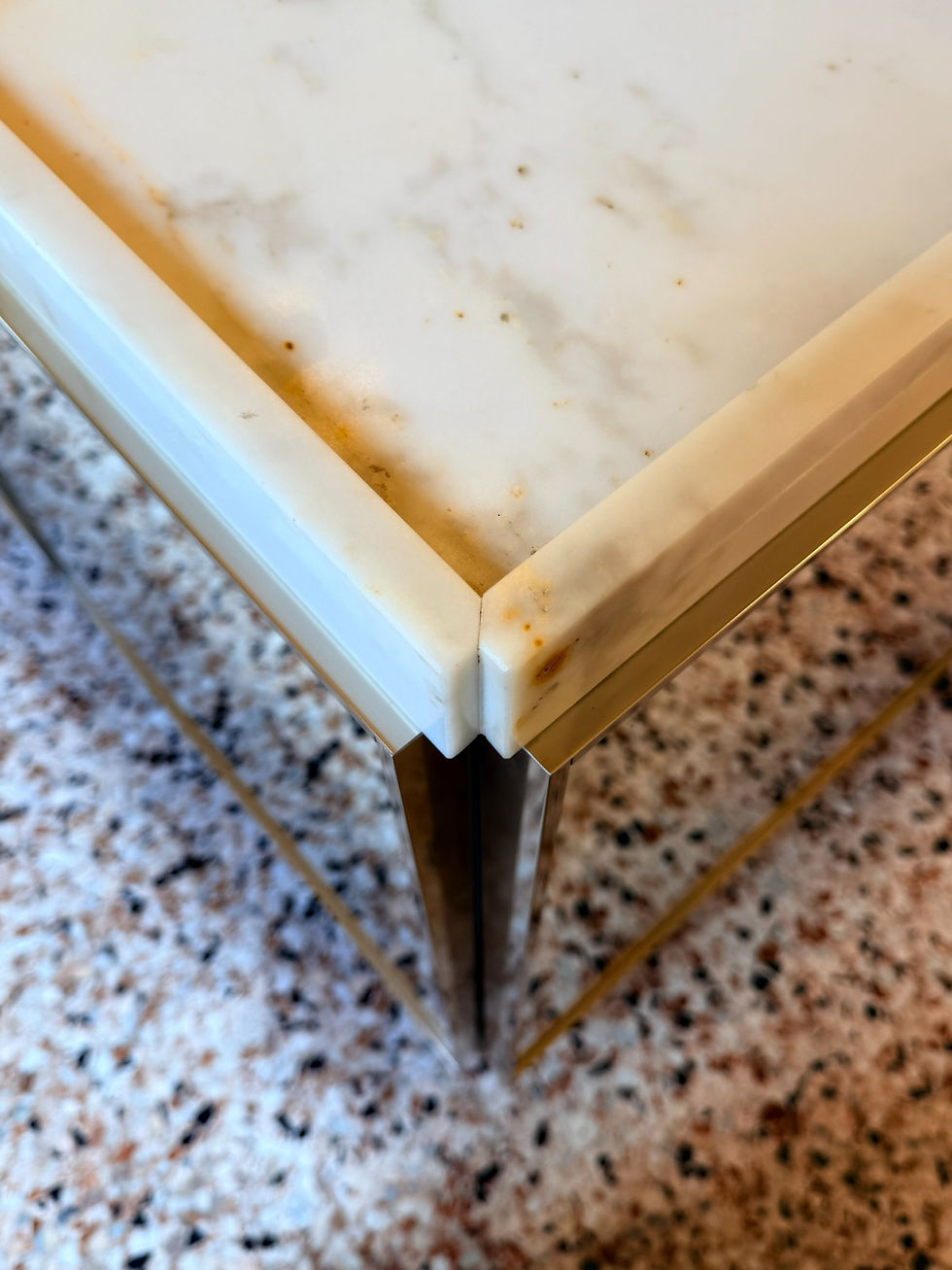
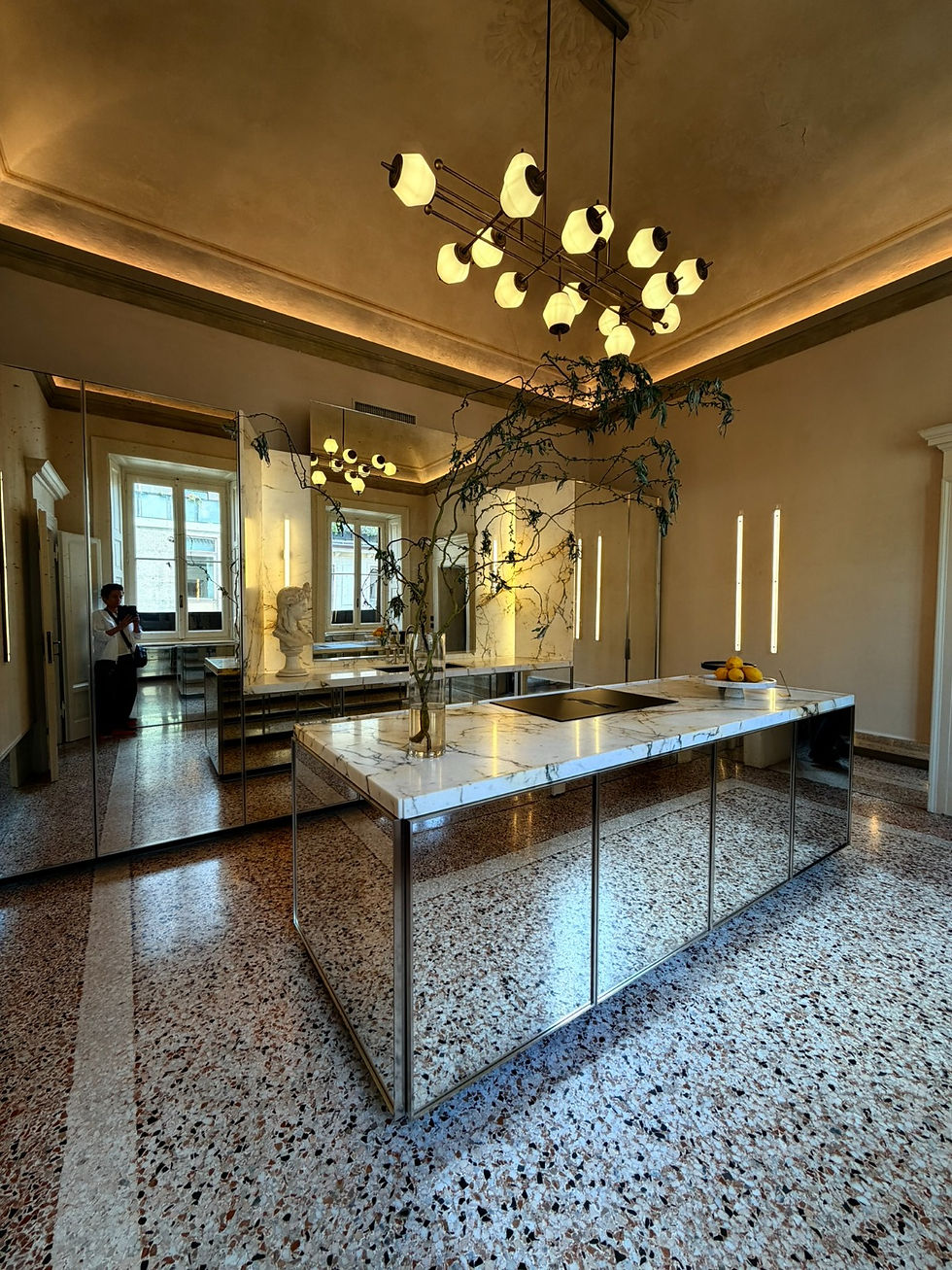
Across many of the exhibition halls, material development carried much of the spatial identity. Warmer wood tones, textured matte finishes, brushed metals, smoked glass, mineral surfaces, and fluted detailing appeared repeatedly throughout the installations. Several manufacturers explored extremely thin European edge profiles with highly controlled shadow gaps and reduced countertop thicknesses that visually compressed the horizontal lines of the kitchen. Others moved toward thicker stone expressions and radius edge conditions that altered the perceived mass and visual weight of islands, shelving systems, and work surfaces. In many of the stronger installations, countertops, backsplashes, vertical panels, and shelving systems were resolved almost continuously, allowing the kitchen to read less as a collection of separate components and more as part of the surrounding architectural envelope.


Surface innovation also extended into integrated worktops, textured ceramics, concealed joinery conditions, and material matched panel systems designed to maintain continuity across large elevations. Even relatively subtle decisions around reflectivity, grain direction, edge detailing, and tonal variation significantly affected how the kitchens performed spatially once experienced in person. Some installations relied on very controlled matte surfaces that absorbed light evenly across long cabinet runs, while others used brushed metallic finishes and reflective mineral surfaces to increase depth within darker compositions.

Appliance integration was handled with a particularly high level of refinement throughout the fair. Several brands presented retractable preparation zones, vertically concealed appliance towers, integrated refrigeration walls, sliding storage systems, and concealed operational areas that allowed much of the kitchen’s technical infrastructure to disappear fully into the cabinetry when not in use. The emphasis often appeared less focused on concealment itself and more focused on preserving visual continuity across the full kitchen elevation. In many cases, appliances aligned directly with surrounding millwork proportions, panel rhythms, and material applications rather than functioning as visually separate objects inserted into the composition afterward.


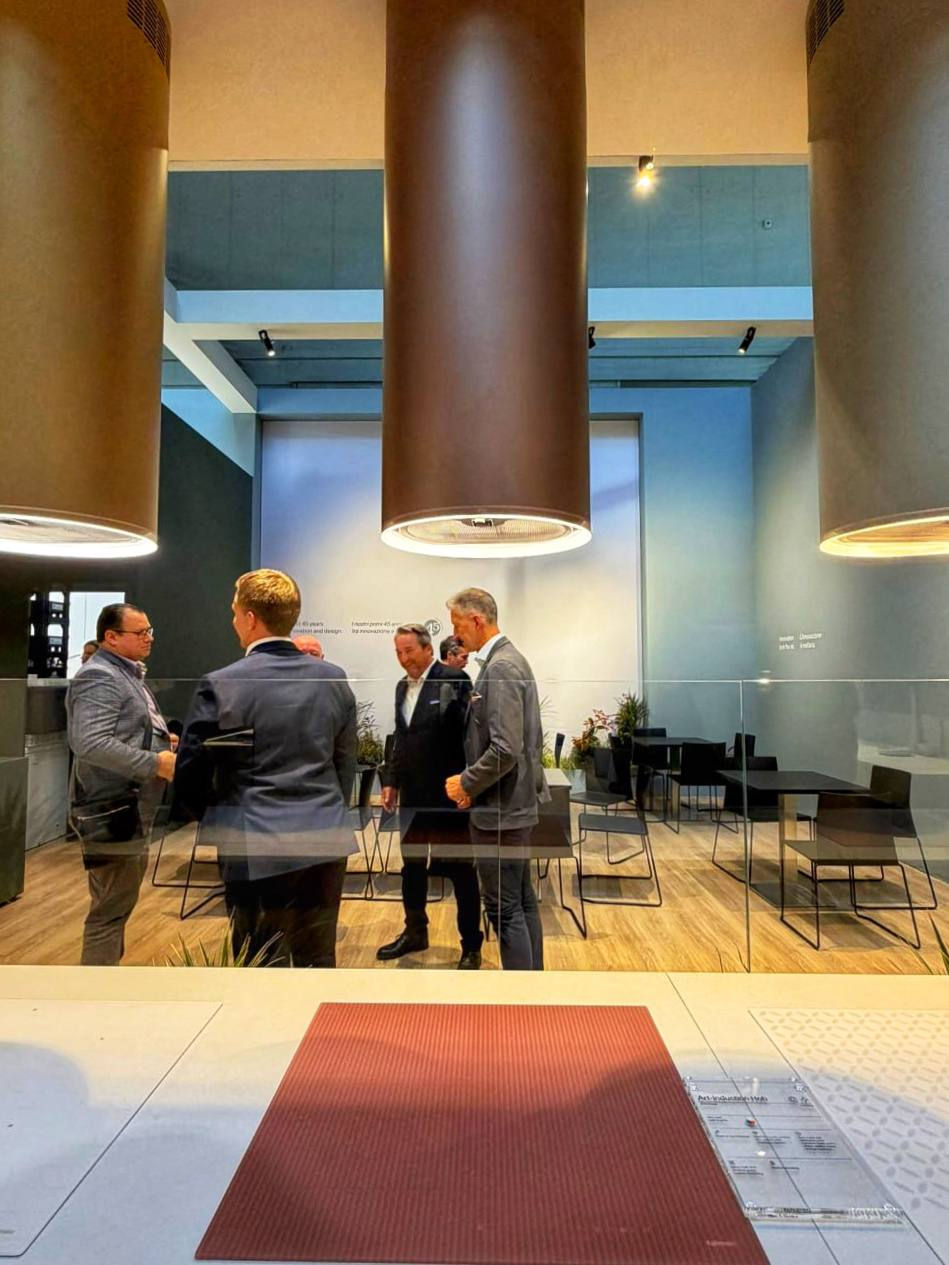
Ventilation systems were also treated increasingly as architectural components within the room. Some extraction systems were integrated directly into cooktops and islands with minimal interruption to the work surface, while others were suspended above islands similarly to lighting fixtures or hospitality ceiling elements. Several presentations resolved ventilation, lighting, ceiling composition, and island geometry together as one coordinated overhead condition. This created a stronger relationship between technical performance and spatial experience, particularly in open residential environments where kitchens remain visually connected to living and dining spaces throughout the day.

A significant amount of the design conversation also extended beyond the fairgrounds into Fuorisalone across Milan. Showrooms throughout the city opened full scale installations focused on detailing, integrated lighting, storage systems, material coordination, and residential functionality. Many presentations examined how kitchens now operate simultaneously as preparation spaces, hospitality environments, social interiors, and transitional zones connected directly to dining and living areas within the home. The showroom environments themselves often reinforced this shift through softer lighting conditions, layered object placement, integrated seating arrangements, and more residential spatial sequencing that blurred the distinction between exhibition and lived environment.
One of the more noticeable aspects across EuroCucina this year was the degree of attention being given to movement and duration inside the kitchen itself. Seating placement, circulation clearances, shelving accessibility, appliance positioning, preparation zones, and island proportions all appeared increasingly calibrated around extended daily use patterns rather than short functional interaction alone. Several kitchens seemed designed with a stronger awareness of how people move gradually between cooking, conversation, hosting, working, and gathering across different times of day.

Sustainability discussions were also present throughout the exhibition, particularly around material sourcing, circular production strategies, energy efficiency, and long term durability. Much of this, however, remained embedded directly within manufacturing processes, engineering systems, and material research rather than positioned as separate visual messaging within the installations themselves.
What remained most consistent throughout Milan was the growing integration between kitchen design, hospitality thinking, and residential architecture. Many of the strongest environments approached the kitchen less as an isolated technical zone and more as part of a continuous domestic landscape shaped through material coordination, operational functionality, spatial continuity, and long term living patterns.

Comments